deep breaths
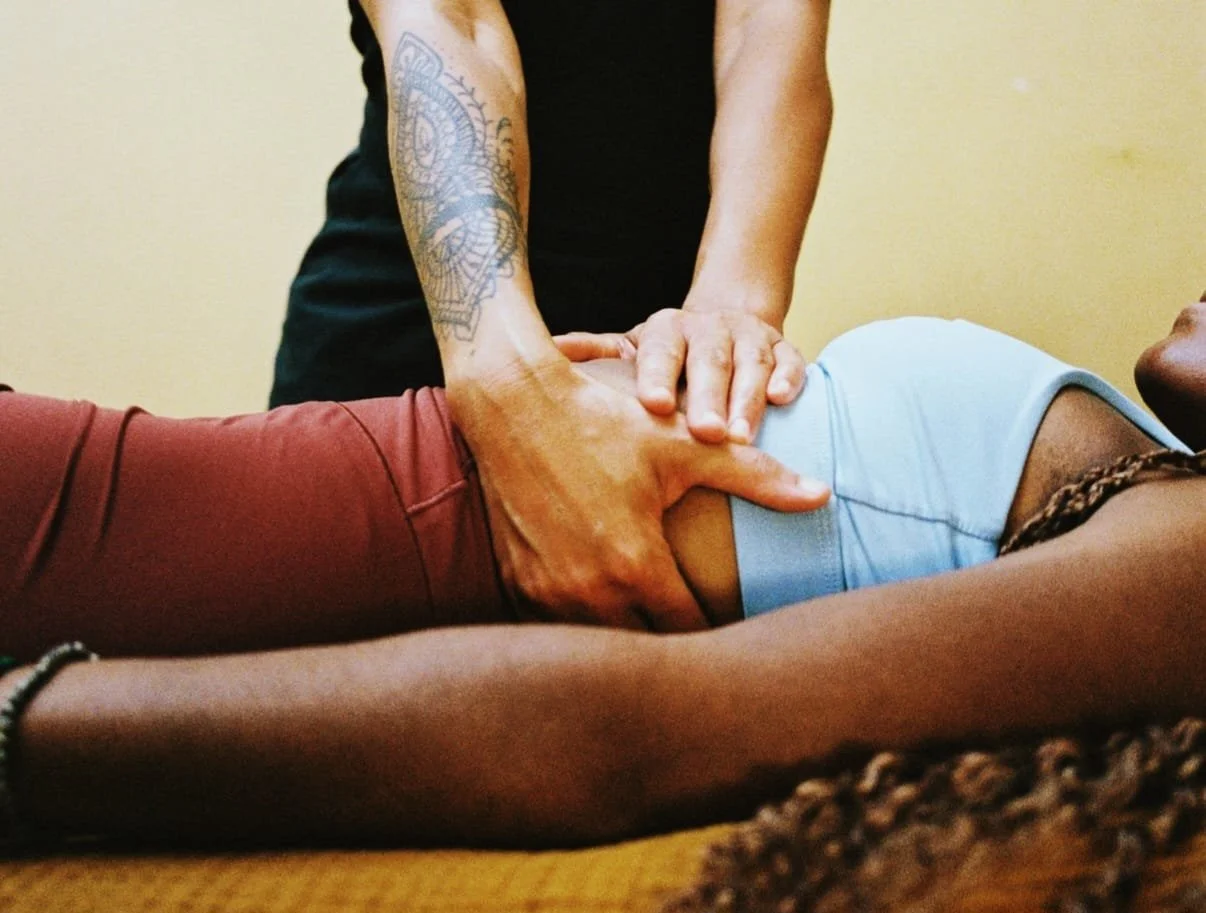
By now most of us are familiar with the concept of diaphragm breathing. If you’ve ever taken part in a yoga class or guided meditation, it’s highly likely that at some point you will have been instructed to take a big, deep, belly breath. It’s a signal to slow down, calm the mind and bring the body into a more restful, parasympathetic state. Living in a big, action orientated city lends itself well to the opposite - short, shallow, urgent breaths that get us where we need to be, fast, and take our shoulders along for the ride too. Rushing around in a state of urgency often leads to a shallow, upper rib breathing pattern, activated by sympathetic nervous system activity, otherwise known as ‘fight or flight’.
Being in a persistent state of sympathetic nervous system activation can really take its toll, often contributing to chronic pain and tension, along with a range of conditions affecting the head, neck, and shoulders. I’ve found this so often to be true, that whenever someone comes to see me with neck or shoulder pain, jaw pain, tension headaches, or chronic low back pain, I will almost always place my hands on their shoulders and ask them to take a few, nice deep breaths. Again and again I notice the same pattern; the upper chest puffs out, the shoulders rise, and the neck contracts. Sometimes the abdomen will also hollow, in a reverse breathing pattern that limits full diaphragmatic expansion.
So what is the connection between persistent pain and an inability to breathe deeply?
The diaphragm isn’t the only muscle involved in respiration. A whole range of accessory breathing muscles play a supporting role, attaching above, below and between the ribcage, and aiding inhalation. The degree of involvement of the accessory muscles depends on whether you’re engaging in quiet (normal) breathing, or more forceful breathing involved in physical exertion, stress or distress. There are many muscles involved in respiration, but the main groups I commonly see linked with shallow breathing and areas of tension or pain are the sternocleidomastoid (SCM) and scalenes, the upper trapezius and pectoral muscles, and the quadratus lumborum (QL). These muscles attach throughout the neck, spine, ribcage, and shoulder girdle.
When we’re in a prolonged state of stress and anxiety, the accessory breathing muscles may be promoted to a ‘lead role’ in respiration, rather than their usual supporting role. Over time, persistent activation and over-reliance on these muscles can contribute to chronic tension, reduced movement, and pain.
One of the simplest ways to relieve tension in the neck, shoulders, jaw and low back is by practising bringing the breath all the way into the diaphragm and lower ribcage. Doing so may help the accessory breathing muscles to relax, creating more space and movement, while guiding the body towards a more restful ‘rest and digest’ state.
expanding the breath
Find a comfortable position and place both palms on either side of your lower ribcage, so that your fingers point inwards. You should get a sense that you are gently cupping the ribs on each side.
Take a few slightly deeper breaths and feel the lower ribs expand with each inhalation. You may notice the ribcage expanding both outwards and slightly upwards as you breathe in.
If you notice your shoulders rising, or your neck becoming tense, gently try to relax them as much as possible and focus on bringing your attention back down to the lower ribcage.
With each inhalation, feel the middle fingers of each hand gliding outwards and away from each other.
As you breathe out, follow the movement with your hands, guiding them gently back inwards towards each other and slightly downwards.
Gradually begin to make the out-breath slightly longer than the in-breath; signalling to the nervous system that it’s safe to shift into a more restful, parasympathetic state.
If you’re experiencing persistent neck or shoulder pain, tension headaches, jaw pain, TMJ dysfunction, or low back pain, and feel you would benefit from in-person guided support, you can book an appointment here, or get in touch to arrange a call to discuss treatment options.
